Marine heat exchange systems operate under demanding conditions, where seawater exposure, continuous operation, temperature changes, and limited maintenance opportunities can affect equipment performance. Stainless Steel Tube for Marine Condenser applications is an important topic for marine equipment manufacturers and industrial engineers seeking dependable heat transfer solutions. Tube material, surface condition, corrosion resistance, and manufacturing consistency all influence the service performance of a condenser.
As marine vessels and offshore facilities continue to improve their energy efficiency, heat exchanger design has become increasingly important. Condenser tubes must support effective heat transfer while maintaining structural integrity in environments that may involve moisture, salt, vibration, and changing operating loads. Selecting suitable materials and maintaining strict manufacturing standards are therefore essential to the long-term reliability of marine cooling equipment.
Marine condensers are used to transfer heat between fluids and help maintain the required operating conditions of connected equipment. Depending on the system design, they may serve power generation equipment, refrigeration systems, marine air conditioning, and other onboard thermal management applications.
Unlike many land-based installations, marine equipment is exposed to a combination of environmental and mechanical challenges. Salt-laden air, seawater contact, vibration, and restricted access for maintenance can place additional demands on heat exchanger components. These conditions make tube selection an important part of equipment design rather than a simple material purchasing decision.
These factors should be evaluated together when engineers determine the material, wall thickness, dimensions, and connection design of condenser tubes. No single material property can guarantee reliable performance under every marine operating condition.
Material selection directly affects corrosion resistance, mechanical strength, fabrication requirements, and expected service life. Stainless steel is widely used in industrial heat exchange equipment because it combines useful mechanical properties with resistance to corrosion in many environments. However, its suitability for a marine condenser depends on the specific grade and the conditions in which it will operate.
Different stainless steel grades have different alloy compositions and resistance characteristics. Engineers should consider chloride concentration, water temperature, flow velocity, cleaning methods, and the possibility of deposits when selecting an appropriate grade. The use of stainless steel alone does not eliminate corrosion risks, particularly in stagnant areas or locations where deposits create unfavorable local conditions.
For demanding seawater applications, engineers may also evaluate duplex stainless steels, copper alloys, titanium, and other materials. The final choice depends on technical requirements, compatibility with the cooling medium, lifecycle costs, and applicable marine equipment standards.
Reliable heat exchanger performance requires consistent tube geometry, suitable surface quality, and dependable mechanical properties. Small variations in manufacturing can influence installation, tube expansion, joint integrity, and the distribution of fluid within the condenser.
| Technical Characteristic | Why It Matters | Evaluation Focus |
|---|---|---|
| Outer diameter | Supports proper installation and alignment | Dimensional consistency and equipment compatibility |
| Wall thickness | Influences pressure resistance and heat transfer | Design requirements and thickness tolerance |
| Surface condition | Affects cleanliness and deposit behavior | Surface finish and freedom from harmful defects |
| Material composition | Influences corrosion resistance and mechanical behavior | Grade verification and material traceability |
| Tube straightness | Supports handling and installation | Dimensional inspection and production consistency |
| Joint compatibility | Helps maintain reliable connections with the tubesheet | Compatibility with the specified joining process |
Dimensional accuracy is essential because condenser tubes must fit the equipment design and installation method. Variations in outer diameter or wall thickness can affect tube expansion, joint formation, and the consistency of the finished assembly. Manufacturers should therefore establish suitable process controls and verify dimensions against the agreed technical specifications.
Surface quality also deserves careful attention. Scratches, contamination, embedded particles, and other surface defects may affect fabrication or contribute to localized corrosion under unfavorable conditions. Appropriate handling, finishing, cleaning, and inspection procedures help protect tube quality throughout manufacturing and transportation.
For stainless steel tubing, the surface finish should be selected according to the intended application rather than based on appearance alone. A suitable finish can support cleaning and inspection, but it cannot replace correct alloy selection, sound engineering design, or proper water treatment.
The reliability of a condenser tube depends on the entire production process, from raw material control to final inspection. Manufacturing consistency is particularly important for heat exchanger applications because the tubes must meet dimensional and material requirements while remaining compatible with the assembly process.
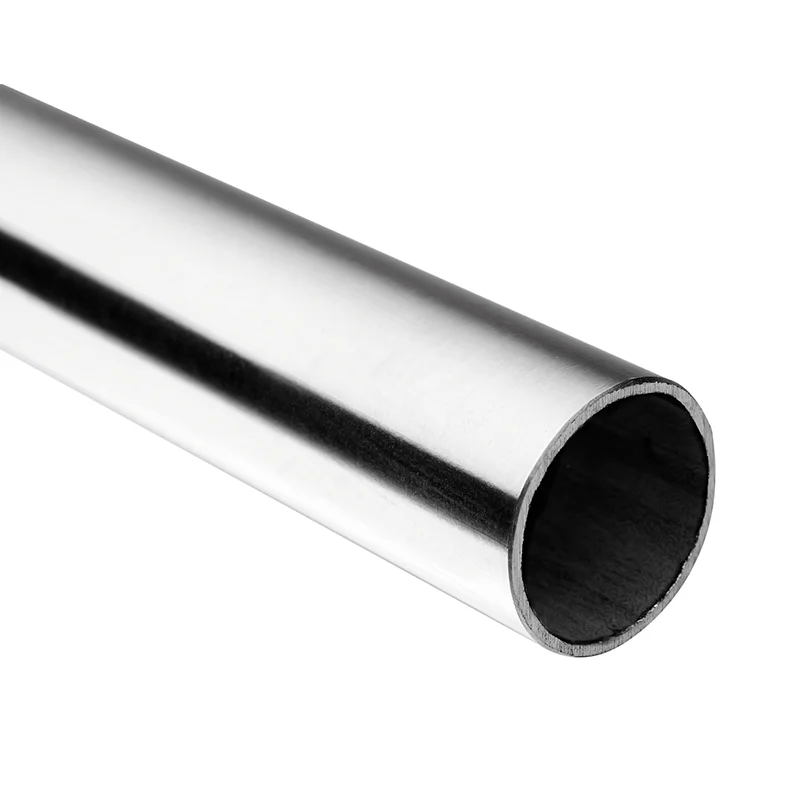
Industrial stainless steel welded tube production may involve forming, welding, weld finishing, heat treatment, sizing, straightening, and inspection. The exact process sequence depends on the product specification, material grade, manufacturing method, and intended service conditions.
Welding is a critical stage in the production of welded stainless steel tubes. The welding process must be controlled to produce a consistent seam with suitable integrity and geometry. Inadequate process control can result in defects that affect mechanical performance or require additional corrective work.
Depending on the tube specification, manufacturers may use online monitoring technologies to control roundness and improve the consistency of the internal weld area. Suitable finishing processes can help achieve the required internal geometry, while inspection procedures are used to verify compliance with the relevant technical requirements.
Weld quality should be evaluated according to the applicable specification and inspection plan. Visual examination, dimensional checks, and appropriate nondestructive testing may be required depending on the product and its intended use. The inspection method should match the risks and acceptance criteria defined for the application.
Heat treatment may be used to achieve the required metallurgical condition and support consistent material properties. For suitable stainless steel grades, controlled heat treatment can help address the effects of cold working and welding. The process must be appropriate for the specific alloy and product requirements.
Online heat treatment equipment can support continuous production when properly configured and controlled. Temperature uniformity, processing conditions, and subsequent handling all influence the consistency of the finished tube. Manufacturers should maintain appropriate process records and verify that the resulting product meets the agreed requirements.
Quality control should not be limited to the final inspection stage. Checking material identification, production parameters, weld condition, dimensions, and surface quality at appropriate stages helps identify deviations before they affect finished products.
A systematic approach to production control improves consistency and helps manufacturers respond to technical requirements from different industrial sectors. It also provides a clearer basis for investigating defects and improving manufacturing processes.
The main purpose of a condenser is to transfer heat efficiently between process streams. Tube material and geometry contribute to this function, but overall thermal performance depends on several interacting factors, including fluid properties, flow distribution, temperature differences, fouling, and the design of the complete heat exchanger.
Engineers should evaluate tube dimensions and material properties alongside the intended duty of the equipment. A thinner tube wall may reduce resistance to heat transfer through the tube material, but wall thickness must still meet the mechanical design requirements. Material selection should therefore balance thermal efficiency with pressure resistance, corrosion allowance where applicable, and expected service conditions.
Consistent flow distribution helps a condenser use its heat transfer surface effectively. Uneven flow may create local differences in velocity and temperature, which can influence heat transfer and increase the risk of deposits or erosion in certain areas.
Fouling is another important consideration. Deposits can add thermal resistance and reduce effective heat transfer. Their formation depends on water quality, temperature, flow conditions, and the chemical and biological characteristics of the cooling medium.
Appropriate system design and maintenance planning can help control these risks. Depending on the application, measures may include suitable filtration, water treatment, controlled operating conditions, and cleaning procedures compatible with the tube material.
Even a well-manufactured tube can underperform if it is installed incorrectly. Tube handling, cutting, cleaning, insertion, and joining should follow the equipment manufacturer's instructions and the applicable engineering requirements.
During installation, care should be taken to prevent scratches, deformation, and contamination. Improper handling can damage the surface or affect dimensional accuracy, while unsuitable joining practices may compromise the integrity of the tube-to-tubesheet connection.
The tube-to-tubesheet joint is a critical part of many shell-and-tube condensers. Depending on the design, connections may be formed by mechanical expansion, welding, or a combination of methods. The selected method should be compatible with the tube and tubesheet materials, operating pressure, temperature, and service conditions.
Proper joint design and installation help reduce the risk of leakage between fluid circuits. They also support stable operation and make inspection findings easier to interpret during maintenance.
Maintenance planning has a direct influence on the reliability of marine condensers. Saltwater exposure and the presence of suspended particles or biological matter can create conditions that require regular inspection and cleaning. The appropriate maintenance interval depends on the operating environment, system design, water quality, and historical performance.
Routine monitoring can help identify changes in heat transfer performance before they lead to major operational problems. Engineers may review temperature differences, pressure drop, cooling flow, and other operating indicators to assess whether deposits, restrictions, or equipment deterioration may be developing.
These symptoms are not conclusive diagnoses. Proper investigation should consider operating records, inspection results, water chemistry, and the design of the complete condenser. Cleaning and repair methods should be selected carefully to avoid damaging the tubes or introducing additional corrosion risks.
Environmental performance is becoming an increasingly important consideration in marine engineering. Efficient heat exchange can support better system operation, while suitable maintenance practices may reduce unnecessary component replacement and associated material consumption.
However, environmental performance cannot be assessed through material selection alone. The full system design, energy demand, cooling medium, maintenance requirements, and end-of-life treatment all contribute to the overall environmental impact.
Long-lasting components can reduce the frequency of replacement when they are properly selected and maintained. Consistent manufacturing quality also helps minimize rejected products and avoidable production waste.
For marine equipment manufacturers, an effective lifecycle approach considers initial fabrication, installation, operating performance, maintenance, and eventual replacement. This broader perspective helps engineers compare technical options using realistic operating assumptions instead of relying on a single material property.
Manufacturers can contribute by improving production efficiency, controlling material usage, and maintaining traceability throughout the supply process. These practices support more responsible resource management while preserving the performance requirements of industrial equipment.
Selecting a qualified manufacturing partner involves more than comparing product descriptions. Technical documentation, production capability, process control, and communication are all relevant when assessing whether a manufacturer can meet the requirements of a marine heat exchanger project.
The evaluation should begin with a clear technical specification. This should identify the required material grade, dimensions, tolerances, manufacturing method, inspection requirements, and any applicable industry or project standards. Clear specifications help reduce misunderstandings and create a consistent basis for evaluating product conformity.
Certifications and management system documentation can provide useful evidence of an established quality framework. Nevertheless, a management system certificate does not automatically establish that every product is suitable for a specific marine condenser. Product compliance must be assessed against the actual technical requirements and supporting inspection documentation.
Marine engineering continues to evolve as equipment designers seek greater operating efficiency, more dependable components, and improved lifecycle management. Heat exchanger development is influenced by changes in vessel design, onboard energy systems, offshore infrastructure, and environmental requirements.
These developments place greater emphasis on material compatibility, reliable fabrication, and accurate quality verification. Manufacturers are also investing in production monitoring and process control to improve consistency and identify deviations earlier in the manufacturing cycle.
Traceability helps connect finished products with relevant material records, production information, and inspection results. This is valuable when equipment requires documented verification or when a performance issue needs to be investigated after installation.
Closer coordination between tube manufacturers, heat exchanger designers, and equipment fabricators can also improve project outcomes. Reviewing dimensions, joining methods, operating conditions, and inspection requirements at an early stage helps reduce avoidable design changes and production delays.
As marine cooling systems become more technically demanding, the combination of suitable materials, controlled manufacturing, and clear documentation will remain important to reliable heat exchanger performance.
There is no universal tube specification suitable for every marine condenser. A solution that performs well in one cooling circuit may not provide the same service life in another because water chemistry, operating temperature, velocity, pressure, and maintenance practices can differ significantly.
Before finalizing a specification, engineers should assess the actual operating environment and determine which material and manufacturing requirements are essential. This assessment should include compatibility with connected components and the proposed cleaning and inspection procedures.
| Project Requirement | Recommended Evaluation |
|---|---|
| Seawater cooling | Assess chloride-related corrosion risks and material suitability |
| Continuous operation | Review mechanical integrity, process stability, and maintenance access |
| High heat transfer demand | Evaluate tube geometry, wall thickness, and overall thermal design |
| Strict documentation needs | Define material traceability and inspection records in advance |
| Special joining requirements | Confirm compatibility with the selected tube-to-tubesheet process |
These evaluations provide a practical starting point for specifying tubing that meets the needs of the complete heat exchanger. Final acceptance should always follow the project specification and applicable engineering standards.
Consistent product quality begins with a manufacturing system that combines technical experience, suitable equipment, process monitoring, and effective quality management. For demanding heat exchange applications, manufacturers need to understand not only tube production but also how dimensional accuracy, weld quality, surface condition, and material properties influence downstream fabrication.
Zhejiang Shuangsen Metal Technology Co., Ltd. specializes in the research, development, and production of thin-walled stainless steel pipes and related pipeline connection products. Located in Wenling, Zhejiang Province, China, the company benefits from access to major regional logistics routes near Ningbo and Shanghai ports.
The company has developed its production capabilities around industrial stainless steel welded pipe manufacturing. Its production equipment includes online roundness control, internal weld leveling, and bright solution heat treatment technologies. These capabilities support process control and product consistency, subject to the requirements of each product specification.
Zhejiang Shuangsen Metal Technology Co., Ltd. maintains a quality-oriented approach to stainless steel pipeline manufacturing. Its stated management system certifications include ISO 9001 for quality management, ISO 14001 for environmental management, ISO 45001 for occupational health and safety, and ISO 13485 for medical device quality management. The relevance of each certification depends on the specific product, production scope, and project requirements.
The company also reports recognition as a national high-tech enterprise and a specialized, refined, distinctive, and innovative enterprise. Its experience in stainless steel pipe production and related fittings provides a foundation for serving industrial sectors with different technical requirements.
For marine heat exchanger projects, product suitability should be confirmed through the specified material grade, dimensions, manufacturing method, and inspection documentation. Clear communication between the manufacturer and equipment engineering team helps ensure that the selected tubing aligns with the intended operating conditions.
As demand for dependable marine cooling and heat exchange equipment continues to develop, Stainless Steel Tube for Marine Condenser applications will remain closely linked to material engineering, manufacturing precision, and lifecycle reliability. Zhejiang Shuangsen Metal Technology Co., Ltd. is committed to continuous improvement in stainless steel pipe manufacturing, supporting industrial applications through production expertise, process control, and quality-focused management.
By combining established manufacturing experience with ongoing technical development, Zhejiang Shuangsen Metal Technology Co., Ltd. aims to provide dependable stainless steel pipeline products for a broad range of industrial requirements. For projects involving marine condensers and other demanding heat exchange systems, the company offers a manufacturing background that can support technical evaluation and the development of application-specific pipeline solutions.
-